The New Golf: Golf's Biggest, Youngest, Most Diverse Year on Record, and What It Means for What Your Gear Is Worth
Golf just posted its biggest, youngest, most diverse year on record. Here is what the movement means for what the gear already in your bag is worth.
Look around a course today and it is not the room golf used to be. More women are playing than ever before. More young players. More players of color. If golf has started to feel less like a private club and more like something you got in on early, you are not imagining it. You are early to a real shift, and there is evidence that it is already changing what the gear sitting in your garage is worth.
Golf is bigger than it has ever been
The numbers are not close. The National Golf Foundation counted 48.1 million golfers in the US in 2025, the eighth straight year of growth in on-course participation, up about 50 percent over the past decade and on pace to cross 50 million players in 2026. Rounds played hit all-time records, even with roughly 2,000 fewer golf facilities than a decade ago.
It looks different, too. Women now make up 28 percent of on-course golfers, a record, up 46 percent from 2019. Players of color make up 26 percent, also a record. Golfers 18 to 34 are now the largest age group in the sport, and junior participation is the highest since 2004. The Wall Street Journal summed it up in one headline: "Golf Is Now Cooler and Younger." On r/golf, the sport's largest hub, regulars give away old clubs to newcomers and tend to welcome beginners rather than gatekeep them.
The culture caught up fast
None of this happened in a vacuum. Streetwear and golf have been merging for years: Malbon, Eastside Golf, Metalwood, and collaborations like Aime Leon Dore x FootJoy and NOCTA have made golf gear something you would wear off the course. Creator golf is outdrawing broadcast golf. Good Good, the largest creator-golf channel, has more than 3 million subscribers and has reportedly raised $45 million; its videos average around 545,000 views against roughly 85,000 for the PGA Tour's own channel. Topgolf has become a real on-ramp, with 68 percent of Gen Z having visited one. Golf did not get invited into culture. It became part of it.

There is evidence that golf gear is starting to act like drop culture
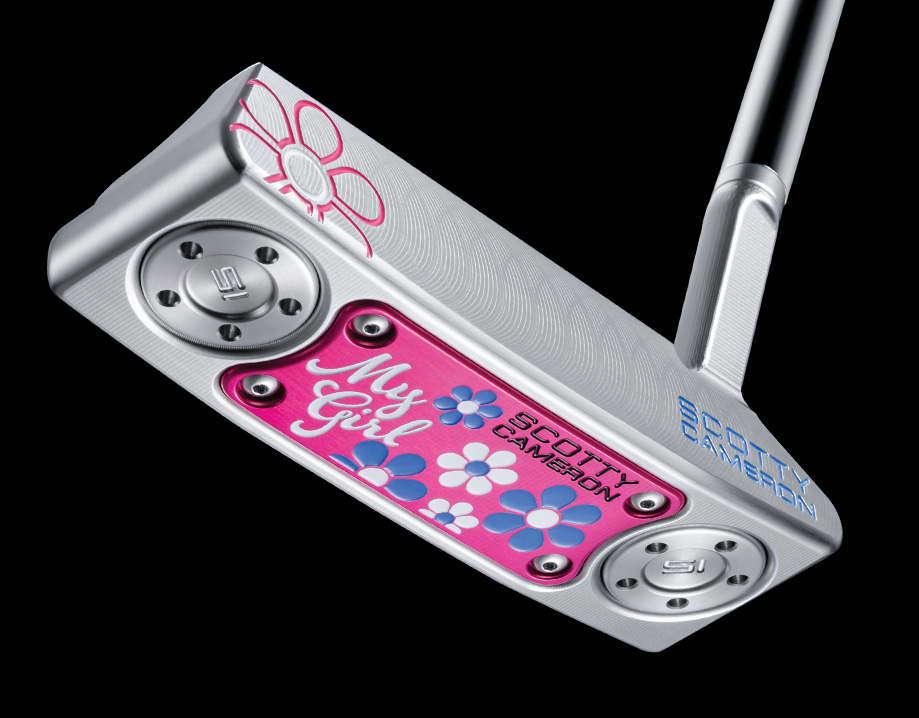
Once a sport has a culture, its gear starts to carry meaning beyond function, and there is evidence that golf gear is already there in places (which is, admittedly, part of why a place like Foresum exists). A Scotty Cameron "My Girl" putter retails for $650 and has resold for $1,200 to $1,400 within days of release. Club Cameron runs an actual sneaker-drop system: $200 a year for membership, 48-hour early access, and a no-resale policy plenty of members quietly test anyway. StockX, the platform built on sneaker resale, now runs a live golf category, where a Kith x TaylorMade putter has sold for $1,030 to $1,570 and a matching driver set went for $9,350.

It is not only about money. A golfer once found a club at Goodwill for $2.99 that turned out to be worth $410. Some collector groups explicitly forbid selling within the group, because to them, turning a piece into cash cheapens the reason they collected it in the first place. This is identity and story first, price second.
Here is the part worth being honest about
Golf getting bigger is not in question; the data is as solid as data gets. Whether the broader gear market is "booming" the same way is a softer claim, worth resisting the urge to oversell. In 2024, equipment and apparel retail actually dipped in several categories even as rounds played kept climbing, according to Golf Datatech. No research body publishes hard numbers tracking collectible golf gear as its own category. The Scotty Cameron and StockX examples above are real, but they describe a concentrated slice of gear, one brand plus a handful of streetwear collaborations, not the whole market. Golf's gear culture is heading toward something like sneaker culture. It has not fully arrived, and claiming otherwise would be exactly the overreach this piece is trying to avoid.
Here is what already got built, and what still hasn't
Other collectible categories did not sit still either, and they built real infrastructure around their own booms. eBay's Authenticity Guarantee already covers sneakers, watches, handbags, and trading cards, verifying each item before it changes hands. StockX built the resale infrastructure sneaker culture runs on, and it already runs a live golf category, where the Kith x TaylorMade drops mentioned above trade. Club Cameron runs real drop mechanics of its own: $200-a-year membership, 48-hour early access. Golf is not outside this landscape. It is already touching pieces of it.
What is still missing is the thing that ties a landscape like that together: a verification rail for golf gear, and a real market built on top of it. StockX's golf category covers a handful of hype collaborations, not the category. Club Cameron sells new drops; it does not verify what happens after. eBay verifies four categories and has never built a fifth for golf. r/golf, the community's biggest hub, bans buying and selling outright to stay non-commercial, so the actual secondary market scattered into the gaps anyway: closed Facebook groups, GolfWRX classifieds ($35 a year, mostly a way to prove you are a real person), and a long list of Venmo-and-a-handshake deals with strangers.
That gap produces real damage. GolfWRX has hosted at least eight threads asking whether a specific Scotty Cameron was real or fake. Collectors trade warnings about known scams: a buyer who pays through Friends and Family then blocks the seller, a middleman who relists an item after receiving it, counterfeits shipping in from overseas listed for as little as $259. One dispute on r/golf went semi-viral over refusing to send a stranger $30 toward a broken driver, really a fight about how little structure this market has, not the $30 itself.
That is the gap Foresum built to close. Every item is verified before it ships. One product page aggregates the real market for an item, bids and asks together, instead of fifty scattered listings across other sites for the same club. A real order book replaces the DM thread. The verification rail golf's landscape was missing, built for the category that earned it.
Golf changed first. Its culture followed fast. The market for what is sitting in your bag is still catching up, and that gap is exactly where you are standing right now. Whatever you are holding, it deserves a real answer to what it is worth. That is what Foresum is for.
Stay ahead of the market
New drops, price movement, and new guides. One email when it matters, no noise.
By subscribing you agree to receive marketing emails from Foresum. Unsubscribe anytime.
More from the blog